
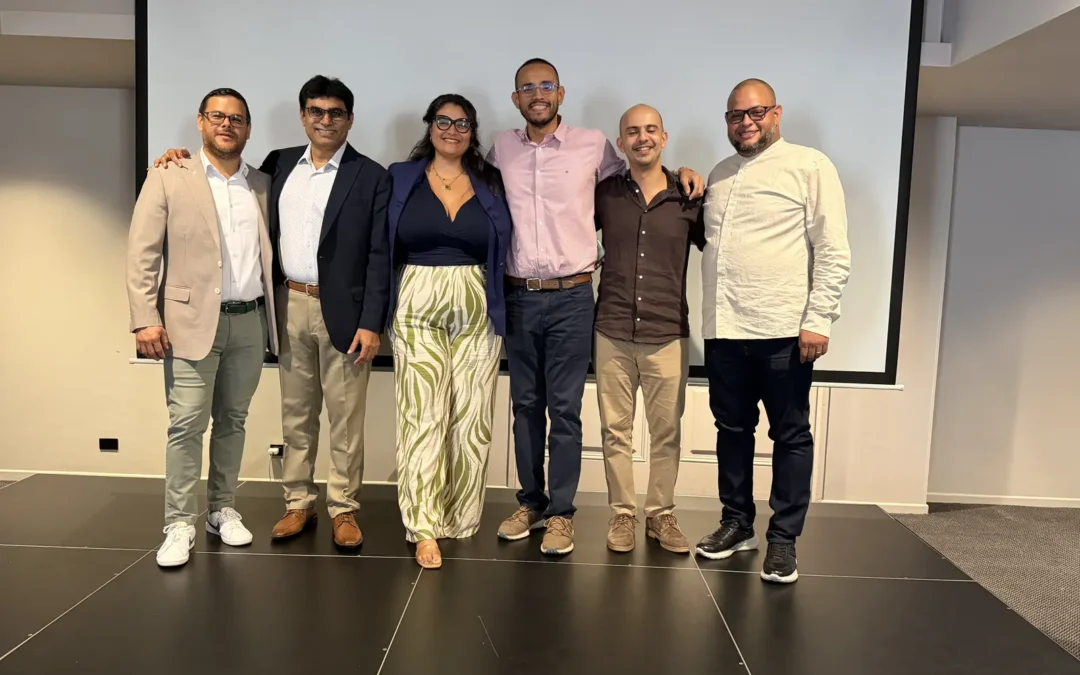
Altia and RE/MAX Life brought an event to Medellín to answer, without the runaround, the questions a Colombian asks before investing in or moving to Panama. Here’s what happened and what we took home.
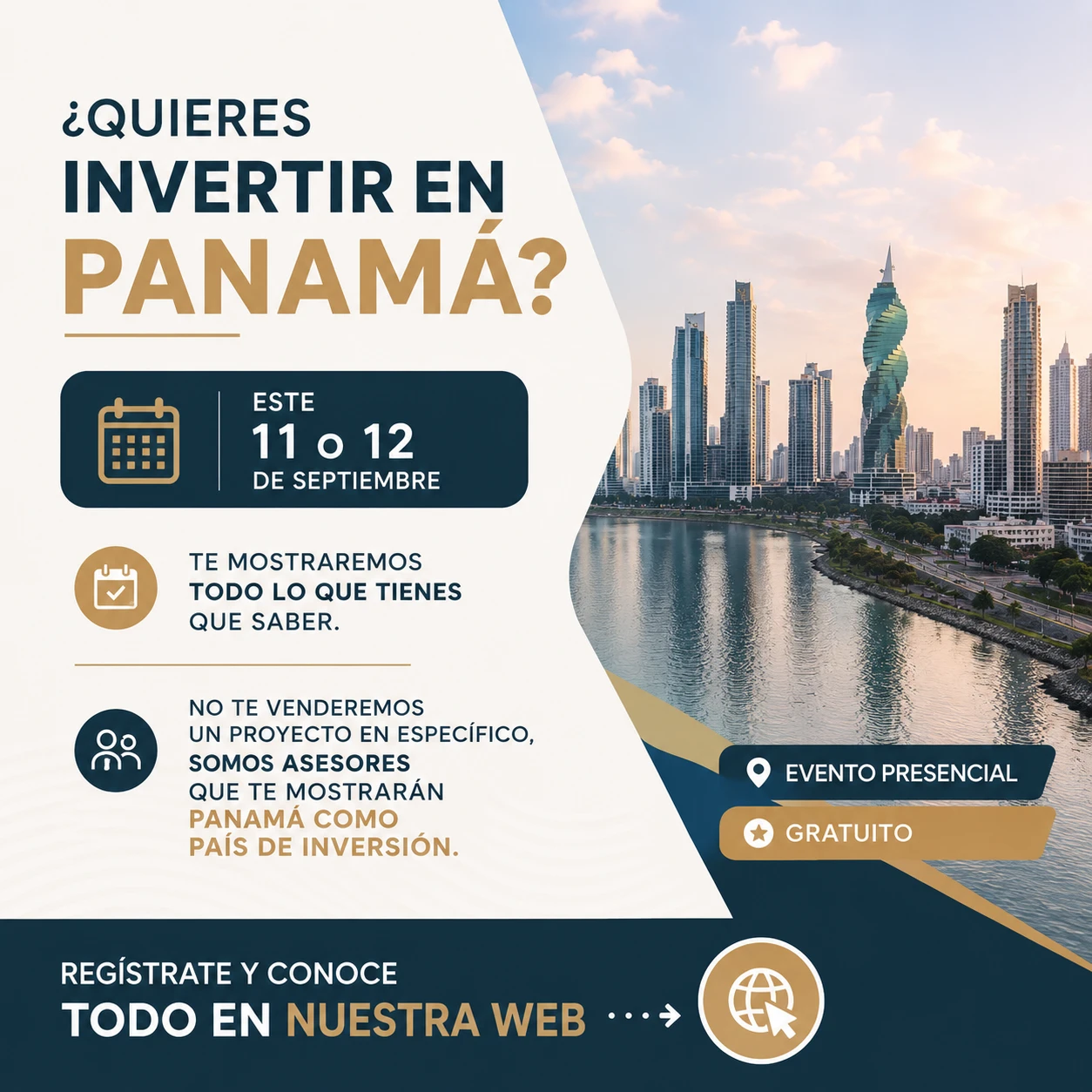
On September 11 and 12 we were in Medellín with a group of business owners, professionals and families who have Panama in mind as a plan B, as an investment, or as the destination for the next stage of their lives. We didn’t go to give a lecture: we went to have a conversation. Four short talks, plenty of time for questions, and one rule we set from the start: no vague answers.
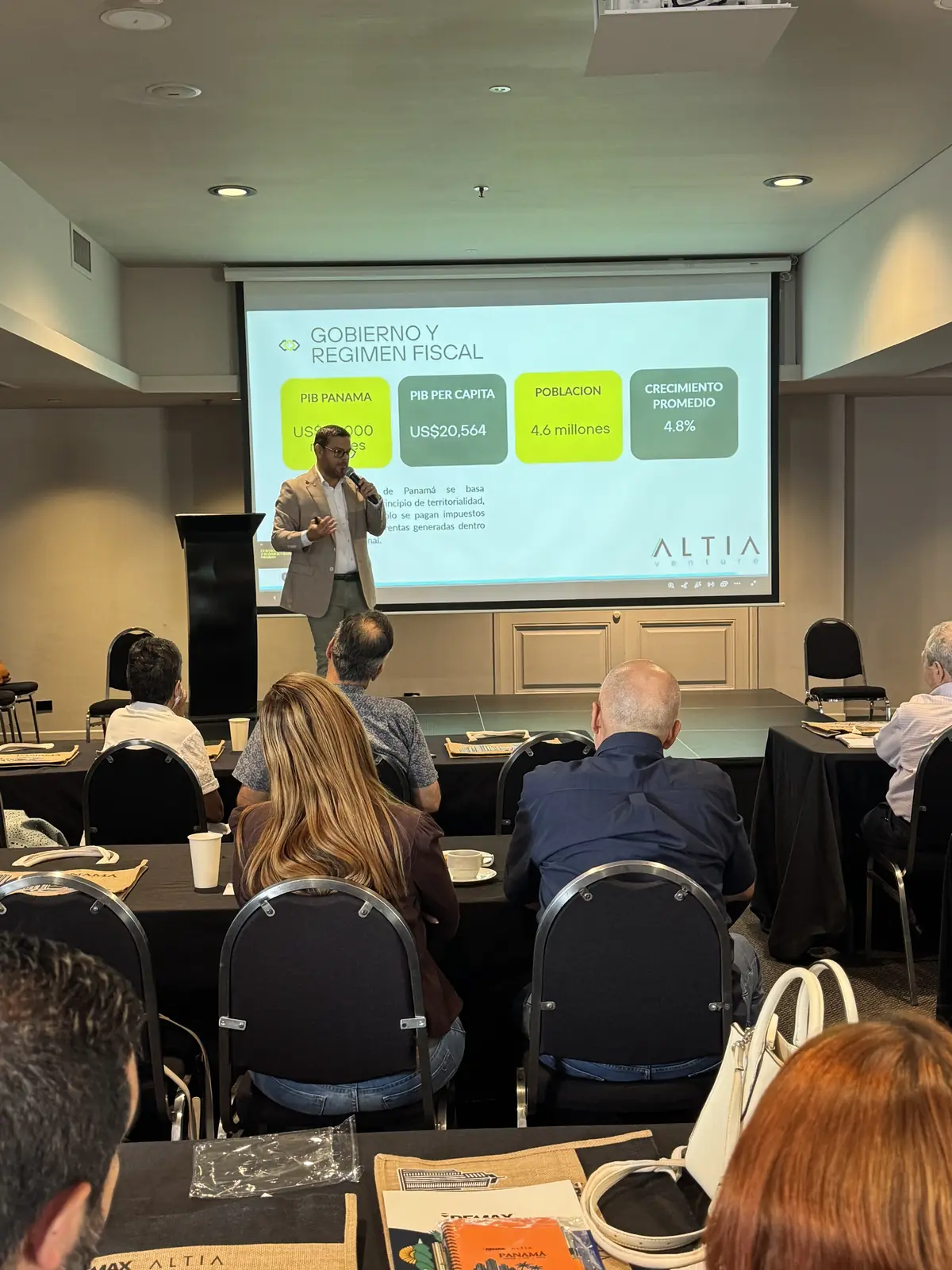
The first talk was given by Gabriel Pichardo, of Altia Venture, and it set the frame. Why Panama: the dollar as legal tender, a territorial tax system that does not tax income generated outside the country, a first-rate banking center, connectivity from Tocumen, and the institutional stability that explains why so many companies and families have made Panama their base. None of that is new to anyone who already knows the country, but hearing it laid out, with figures and compared to the alternatives a Colombian weighs today, changed several conversations over coffee.
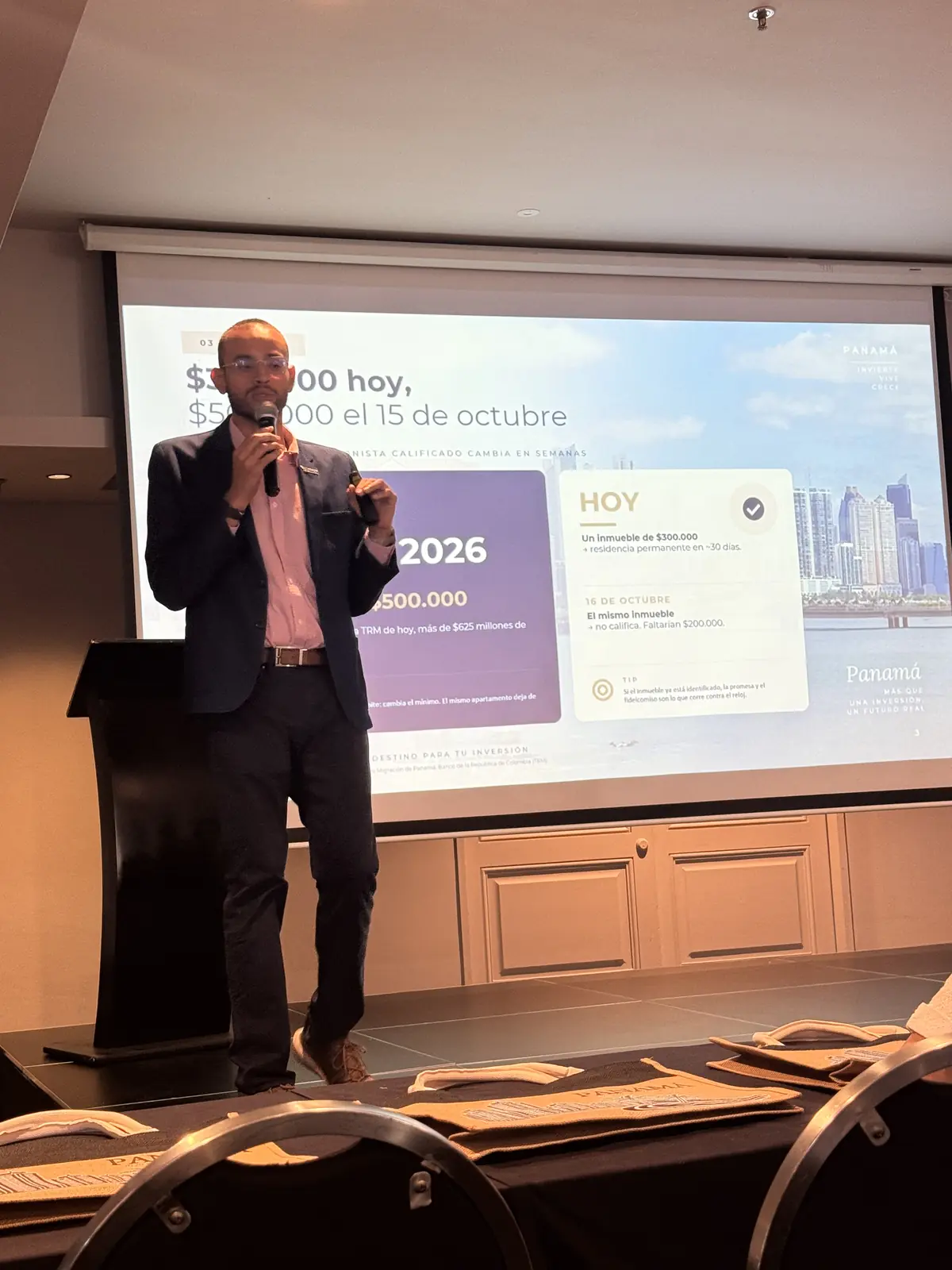
The second was about residency, and it was the most anticipated. We went through the four routes that actually apply to a Colombian passport: Qualified Investor, Own Economic Solvency, Retiree or Pensioner, and the Friendly Nations route, which many attendees believed was available and which does not include Colombia. We explained what each one requires, what status it grants and how long it takes, and we were honest about what was then an open question: the Government was days away from publishing the new Qualified Investor decree. It appeared in the Official Gazette four days after the event, on September 16, which is why the material we sent attendees already incorporates Executive Decree 17 of 2026: the minimum of US$300,000 for a new property is maintained, it rises to US$500,000 for resale, and the much-discussed “deadline” disappears.
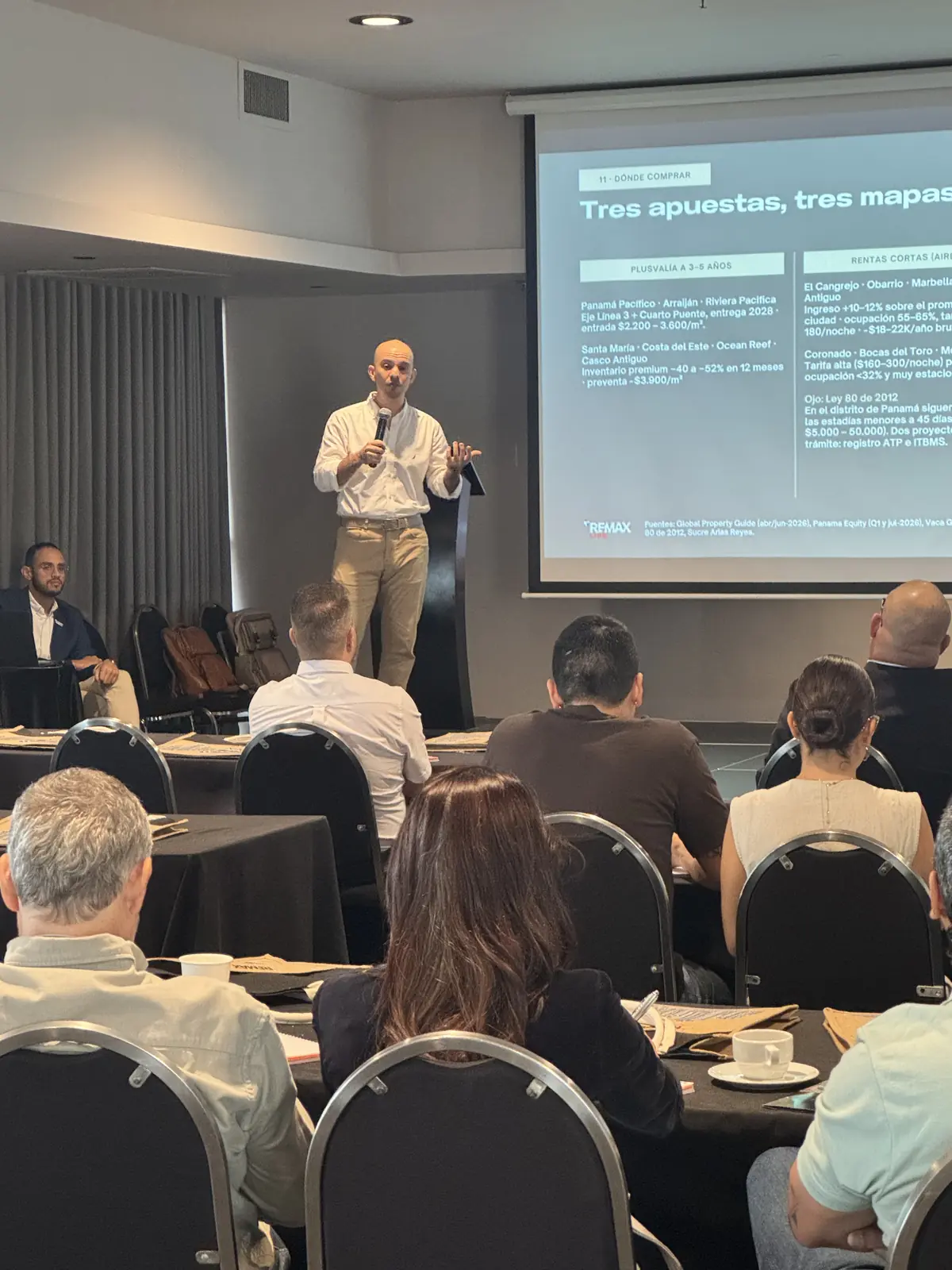
The third talk, led by RE/MAX Life, tackled the question everyone had written down: where to invest and how much it costs. City and beach areas, real price ranges, what maintenance fees do and don’t cover, how property tax works (much lower than most assumed) and what to expect from long- or short-term rentals. The fourth closed the loop with the financial and tax side: how a foreigner opens an account, what a Panamanian bank requires, what investment vehicles exist, and how to structure wealth from Panama without overcomplicating things.
What we took home most was not what we said, but what they asked. Questions about the value Immigration assigns when a property is bought off-plan. About whether an apartment held by a company can be a primary residence. About what happens to residency if the property is sold before five years. About health insurance after 65. Questions from people who are no longer deciding whether Panama, but how. Several of those answers, which we gave verbally in the room, later became short guides that today are part of the material we hand every client: residency, property tax and insurance, each four or five pages, in Spanish and English, updated to current law.
We also confirmed something we already suspected: the decision to invest in another country isn’t made by one person, it’s made by a family, and it’s made over several conversations. That’s why the event didn’t end in Medellín. Each attendee received a summary of the four talks with sources, and since then we’ve continued the conversation one on one, with Altia’s immigration attorney for legal matters and the RE/MAX Life team for real estate.
If you’re in Colombia and Panama is on your mind, the next step is simple: a twenty-minute call to understand your case and tell you, with the law in hand, which route suits you and what it would cost. Write to us and we’ll set it up. And if you’d rather start by reading, ask us for the guides: they’re free and built from exactly the questions we were asked in Medellín.
Altia supports foreigners with their residency, legal structure and accounting in Panama. RE/MAX Life is the country’s first RE/MAX franchise, specialized in foreign investors and retirees.